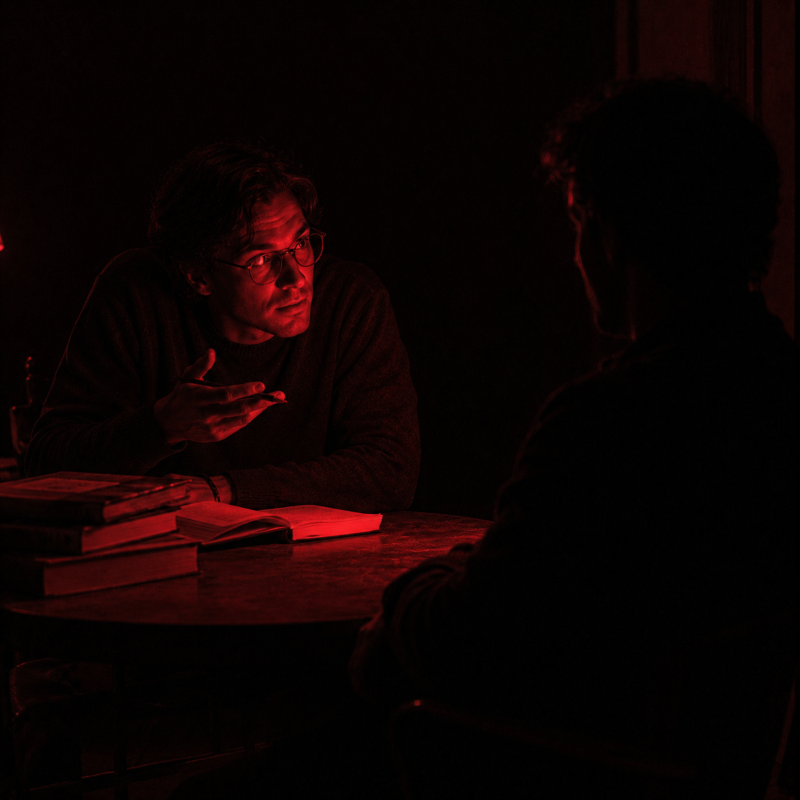
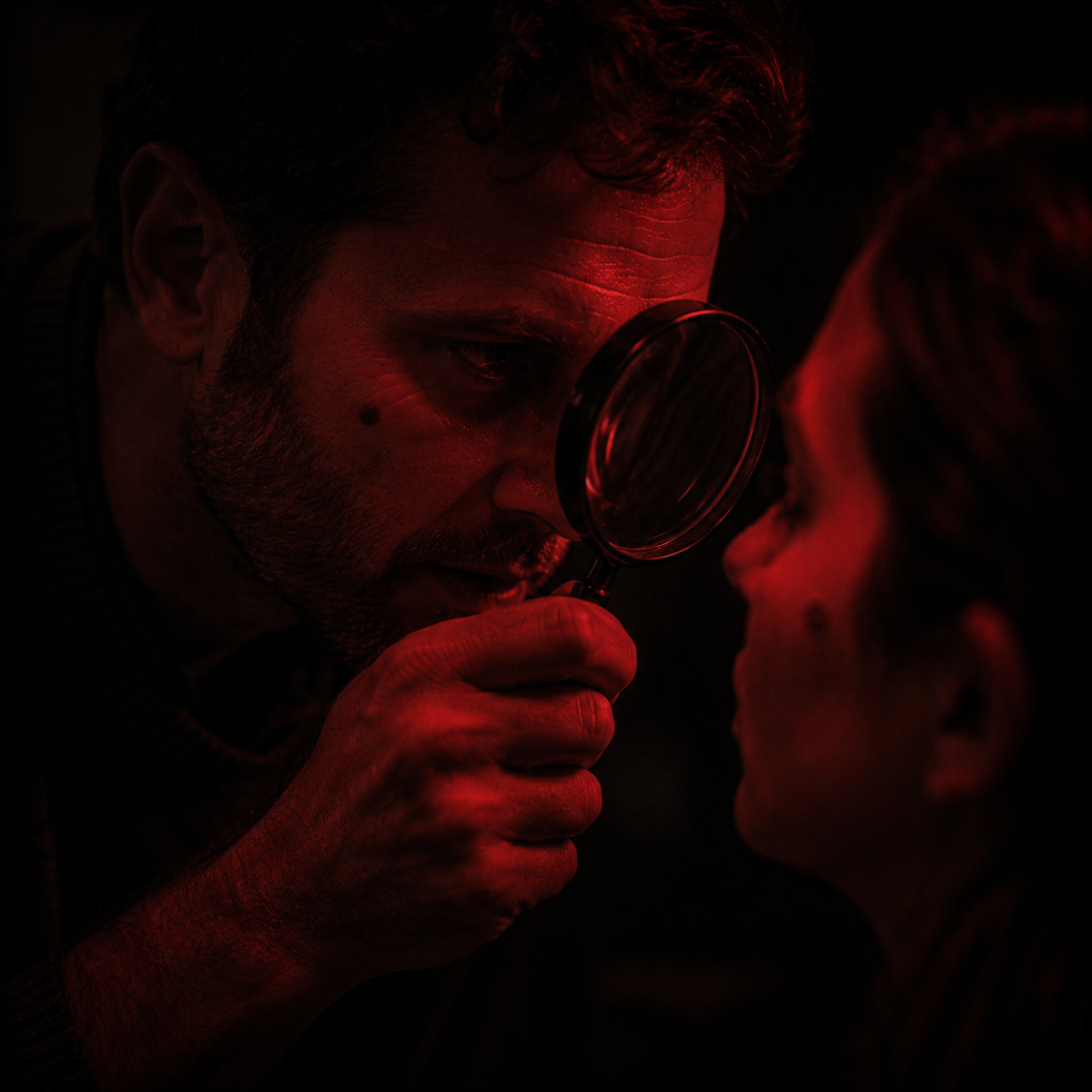
The bias blind spot is the tendency to spot cognitive biases in other people while missing them in yourself. Emily Pronin, Daniel Lin and Lee Ross documented it across three studies at Stanford in 2002, and the pattern held against every comparison group they tried: the average American, fellow students, and strangers in an airport departure lounge.
You can probably name three biases right now. Confirmation bias. Dunning-Kruger. Survivorship bias. You catch them in other people constantly. That is the symptom, not the defence.
The short version
- You judge yourself by your intentions and everyone else by their behaviour.
- Being told about the bias, in the moment, did not fix it in the lab.
- The stronger your identity as a rational person, the wider the gap.
- Introspection is the broken instrument. You cannot fix it with more of it.
What Pronin Actually Found
In The Bias Blind Spot: Perceptions of Bias in Self Versus Others (Personality and Social Psychology Bulletin, 2002), participants were asked how susceptible they were to a list of well-known biases compared with other people. They rated themselves cleaner than the average American. Cleaner than their own classmates. Cleaner than random travellers in an airport.
The mechanism Pronin and colleagues landed on is the interesting part: an interplay of availability and self-enhancement. When you check yourself for bias, you look inward. You search your thoughts, find no trace of prejudice or self-interest, and conclude you are clean.
But bias does not announce itself in introspection. It does not feel like bias. It feels like having a point. Meanwhile, you judge everyone else from the outside, by what they did — where bias is perfectly visible. You are running two different tests and only one of them can fail.
The Detail That Should Worry You
Most write-ups stop there. The follow-up studies are where it gets bleak.
Participants who had demonstrably shown the better-than-average bias were given a description of that exact bias and how it could have shaped their answer. They read it. Then they insisted their own self-assessment had been accurate and objective anyway.
In a final study, people rated a peer’s self-serving explanation of their test performance as biased — and rated their own, structurally identical explanation as fair.
So the advice you have heard a hundred times — just be aware of your biases — was tested directly. Awareness was administered. It did not take. That is the actual finding, and almost nobody repeats it.
Which makes a strange pair with the backfire effect. Corrections do move people on facts about the world. They just do not appear to move anybody on facts about themselves.
Why It Sharpens With Intelligence
Smart people build an identity around thinking clearly, and that identity is precisely the thing the blind spot protects.
Ziva Kunda’s work on motivated reasoning (Psychological Bulletin, 1990) explains the escalation. Holding a flattering belief requires you to construct an apparently reasonable justification for it. A better mind builds a better justification. Your reasoning ability is not a brake here. It is the engine.
A manipulator does not need to out-think you. They need your self-image to do the work, which is exactly why smart people fall for manipulation, and why motivated reasoning feels like thinking rather than defending. Approach someone with intellectual seriousness, treat them as exceptional, and the guard they are certain they are keeping up quietly lowers itself.
What It Looks Like
- The person who dismantles a politician’s logic but cannot see the pattern in their own relationship.
- The analyst who writes about market irrationality and trades on feeling.
- The therapist who reads attachment wounds in clients and not in their own week.
The Only Thing That Helps
If introspection is the faulty instrument, more introspection is not the repair. Looking harder inside gets you a cleaner report from the same broken gauge.
The only correction that survives Pronin’s findings is to judge yourself the way you already judge everyone else: from the outside. Not what you meant — what you did. Not how it felt — the pattern across six months. Not your read on the relationship — what your friends stopped saying about it.
That is uncomfortable, unglamorous, and roughly the opposite of feeling like a critical thinker. It is also the only version that works.
Frequently Asked Questions
Does knowing about the bias blind spot fix it?
Not on its own. Pronin’s participants read a description of the exact bias affecting them and still rated their own judgement as accurate and objective. Awareness was tested directly in the study and did not remove the effect.
Is the bias blind spot the same as Dunning-Kruger?
No. Dunning-Kruger concerns misjudging your competence at a skill. The bias blind spot concerns misjudging your objectivity — believing your reasoning is less distorted than other people’s. A genuinely skilled person can still have a wide blind spot.
Why does it get worse for intelligent people?
Because rationality becomes identity, and because motivated reasoning is limited by your ability to build a plausible justification. Stronger reasoning produces stronger justifications, so a sharper mind defends the blind spot more convincingly, not less.
Sources
- Pronin, E., Lin, D. Y. & Ross, L. (2002). The bias blind spot: Perceptions of bias in self versus others. Personality and Social Psychology Bulletin, 28(3), 369–381. Retrieved 15 July 2026.
- Kunda, Z. (1990). The case for motivated reasoning. Psychological Bulletin, 108(3), 480–498. Retrieved 15 July 2026.